Loading...
Serving Las Cruces, NM and surrounding areas. (575) 222-9104
Serving Las Cruces, NM and surrounding areas. (575) 222-9104
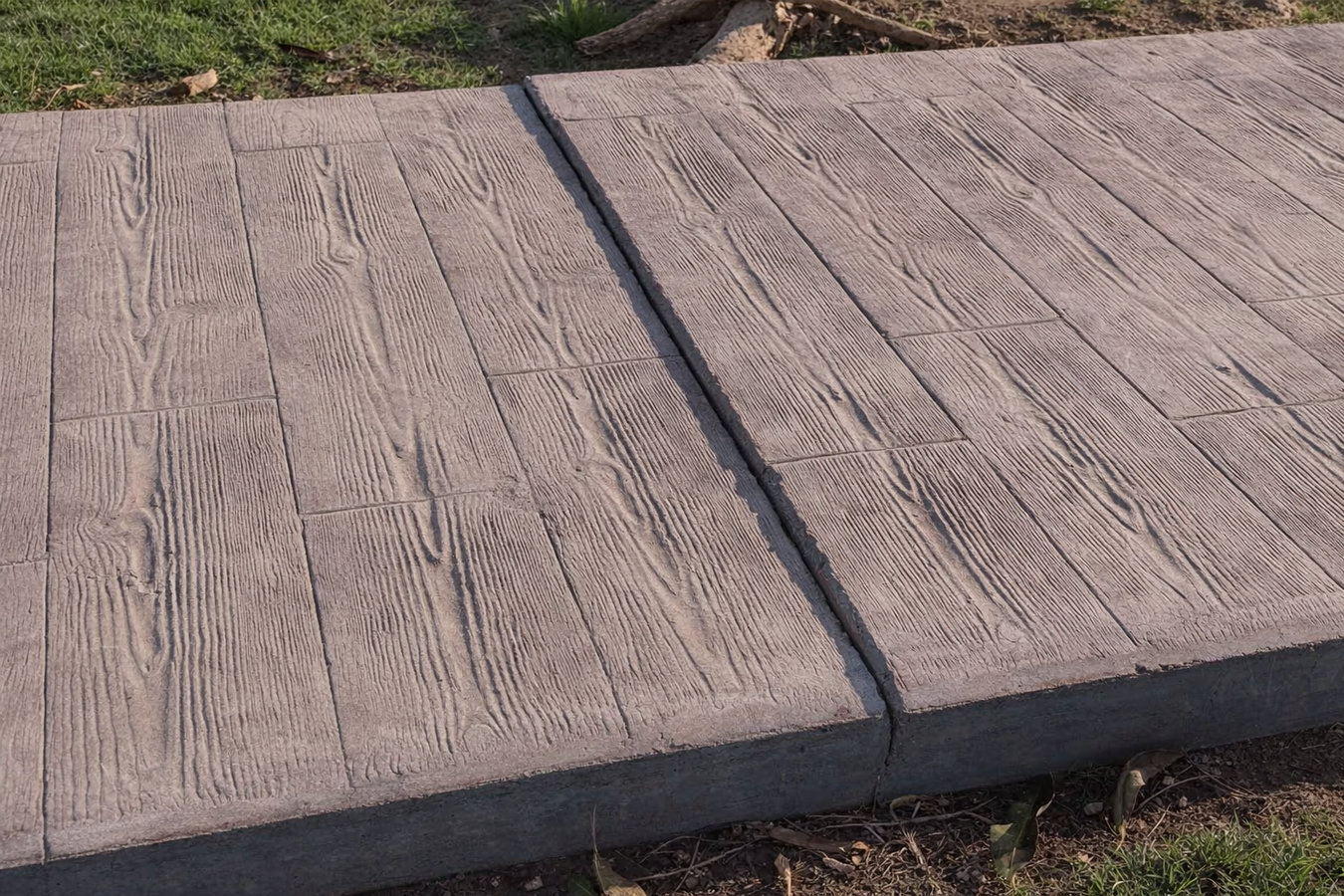
Tired of plain gray concrete? Stamped concrete gives your patio, driveway, or pool deck the look of stone or brick without the cost, and our crews know how to make it hold up in Las Cruces summers.
Stamped concrete in Las Cruces transforms plain slabs into surfaces that mimic stone, brick, or slate - most projects take one to three days from pour to stamp, with the finished surface ready for foot traffic within 48 hours. It is regular concrete pressed with patterned mats and stained before it fully hardens, giving you a one-piece surface that looks like far more expensive materials.
Las Cruces homeowners choose stamped concrete when they want their patio, driveway, or walkway to look intentional rather than utilitarian. The desert climate actually makes the choice practical: stamped concrete holds up to intense UV and temperature swings far better than pavers or natural stone, which can shift and fade on Las Cruces caliche soil. If your current surface is cracked or just dull-looking, this is one of the most effective upgrades you can make. For pathways connecting your outdoor spaces, pairing stamped concrete with concrete sidewalk building gives the whole property a unified finish.
Diagonal cracks or sections sitting at different heights are a sign the base underneath has moved. In Las Cruces, caliche soil expands and contracts with monsoon moisture cycles, accelerating this kind of damage. Patching rarely holds - replacement with proper base prep is the better investment.
Years of Las Cruces UV exposure bleach and pit old concrete surfaces. If the aggregate is showing through, the surface crumbles at the edges, or the color has gone uneven, the concrete is past the repair stage. A fresh stamped pour restores both function and appearance.
A pool deck that scratches bare feet or turns slippery when wet is a safety issue. Stamped concrete can be finished with a slip-resistant texture that also looks good. In the desert, the sun degrades unsealed surfaces faster than in cooler climates, making this a more urgent repair.
A fresh stamped driveway or entry walk is one of the first things buyers notice. If you are adding a covered patio, pergola, or outdoor kitchen, starting with stamped concrete from the beginning is almost always cheaper than upgrading later and ensures the pattern matches across the whole space.
The most popular application in Las Cruces is the backyard patio, where homeowners want a space that feels like an outdoor room rather than a slab of gray concrete. Stamped concrete gives you pattern and color choices that range from simple brushed slate to detailed cobblestone or Saltillo tile patterns that fit the Southwest aesthetic naturally. Every job gets a UV-resistant sealer applied after curing, because the Las Cruces sun fades unsealed color within a season or two.
Driveways are the second most common project, particularly in neighborhoods where curb appeal matters. A stamped concrete driveway with a coordinating border and a complementary pattern for the front walkway makes a property look pulled-together. We also handle pool deck replacements, where the finish needs to be both attractive and textured for slip resistance. For projects that include both decorative elements and purely functional surfaces, our decorative concrete services cover the full range of finish and color options.
Timing and base preparation are the two factors that separate a long-lasting stamped concrete surface from one that fails in a couple of years. Our crews schedule pours for early morning during the summer months, manage the mix for local heat conditions, and prepare the base properly before anything is poured - including addressing caliche soil layers that are common across Las Cruces.
Suits homeowners who want an outdoor living space with a finished, designed look.
Good for homes where curb appeal matters or where a plain driveway looks out of place.
Suited to pools where the deck needs to be both slip-resistant and visually appealing.
Works well connecting the driveway, front entry, and back patio with a unified pattern.
Las Cruces regularly sees summer highs above 100°F, and concrete hardens much faster in that kind of heat. The window for concrete stamping after the pour can shrink to under an hour in peak summer. A crew that does not account for this will produce blurry patterns or premature cracking. Our team schedules pours early in the morning during warm months and adjusts the concrete mix specifically for desert conditions, including sometimes adding ice to the water to slow the set.
Caliche soil is the other major local factor. The hard, calcium-rich layer sitting just below the surface in much of Las Cruces does not drain well, and when it gets wet during monsoon season and then dries out, it shifts. Concrete poured over a poorly prepared caliche base will crack prematurely, often within a few years. Proper excavation and compacted gravel base preparation before the pour is the fix, and it is something we do on every project in this area. Homeowners in Anthony, NM and Sunland Park, NM deal with the same soil conditions and benefit from the same approach.
For homeowners in newer Las Cruces neighborhoods like Sonoma Ranch or Picacho Hills with active HOAs, we help verify your design choice is HOA-compliant before anything is finalized. Most HOAs have rules about color and finish for surfaces visible from the street, and finding that out after the concrete is poured is an expensive problem. We also pull the required City of Las Cruces permits for all applicable flatwork, per City of Las Cruces Development Services requirements.
We will ask the basics: what surface, roughly how large, and what style you have in mind. We respond within 1 business day and can often give you a ballpark range in the first conversation.
We come out to measure, check base conditions, and walk you through pattern and color options. You leave with a written quote covering labor, materials, and base prep - no surprises later.
We pull the required City of Las Cruces permit and lock in your start date. We also walk you through exactly what needs to be cleared from the area before the crew arrives.
The crew handles demolition, base prep, forming, pouring, stamping, and sealing. After the surface cures, we walk the project with you, point out the control joints, and give you care instructions. You can typically walk on it within 48 hours.
We respond within 1 business day - no obligation, no pressure. After you submit, someone from our office will call to schedule a free on-site estimate where we measure the area, check base conditions, and walk you through your design options.
(575) 222-9104We modify the concrete mix and schedule pours for early morning during Las Cruces summers. That is the only way to keep the stamping window open long enough to do clean, consistent work when it is 100°F outside.
Las Cruces caliche soil is one of the most common reasons stamped concrete fails prematurely here. We excavate, bring in clean gravel fill, and compact properly before any concrete goes down - because a well-prepared base is what makes the surface last.
The City of Las Cruces requires permits for most new flatwork. We handle all permit paperwork with the city's development office before a single shovel goes in the ground, so your new surface is fully on record and inspected.
We apply a UV-resistant sealer after every stamped concrete project as a standard part of the job, not an upsell. In Las Cruces, skipping the sealer means faded color and a worn surface within a couple of seasons.
Every one of these practices reflects a reality specific to Las Cruces - the heat, the soil, the permit requirements. We have built our process around local conditions rather than applying a generic approach, and that shows in how long our customers' surfaces hold up. For questions about your project, call (575) 222-9104.
Pair stamped concrete surfaces with matching sidewalks to give the entire property a unified, designed appearance.
Learn moreWhen you want color and texture beyond stamped patterns, decorative concrete covers staining, overlays, and exposed aggregate finishes.
Learn moreLas Cruces summers are hard on concrete - starting your project in the right season with the right base prep makes all the difference.