Loading...
Serving Las Cruces, NM and surrounding areas. (575) 222-9104
Serving Las Cruces, NM and surrounding areas. (575) 222-9104
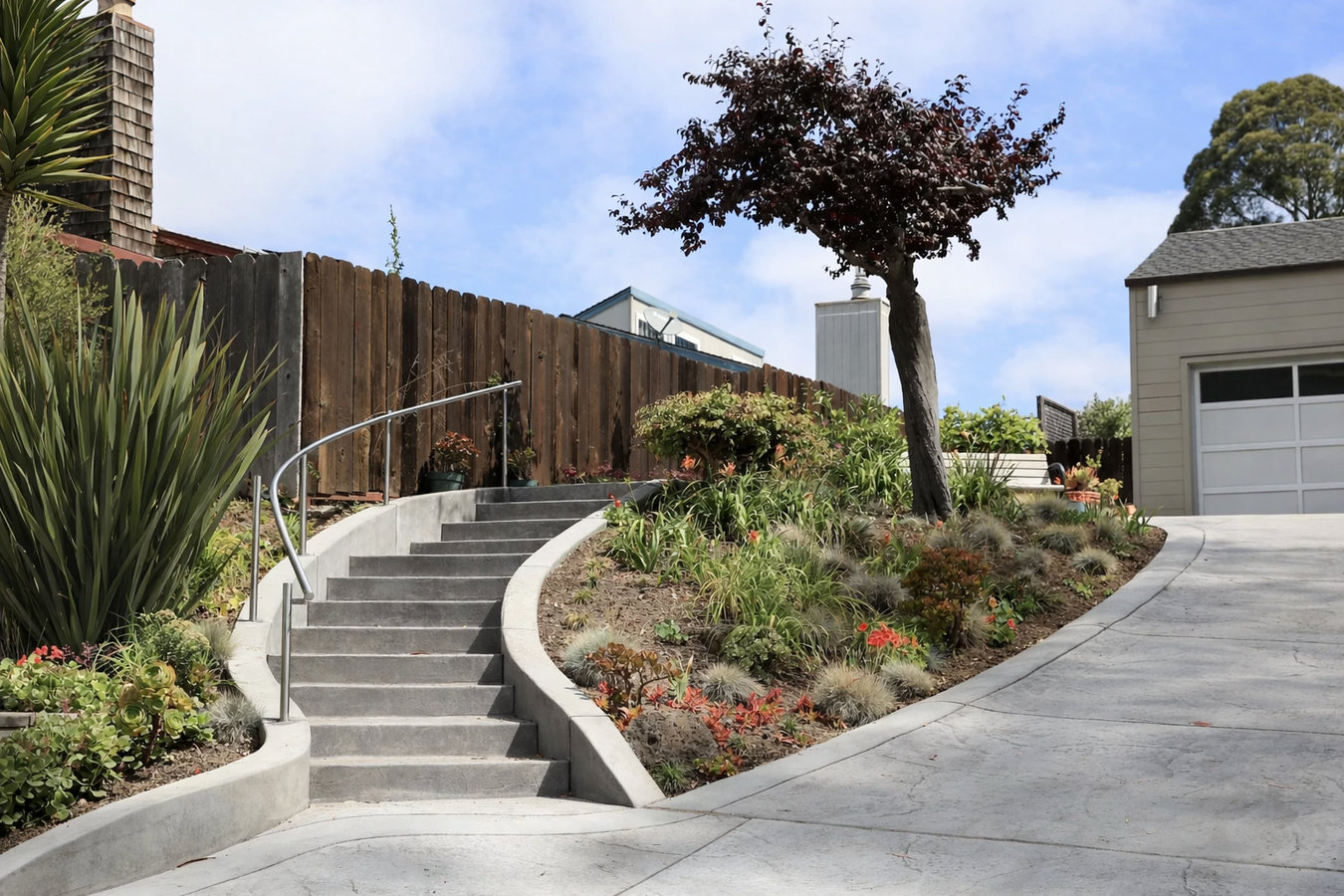
Cracked, rocking, or sunken entry steps? We build concrete steps designed for Las Cruces soil conditions and desert heat, so they stay level and safe through every monsoon season.
Concrete steps construction in Las Cruces means excavating to stable ground, compacting a gravel base designed for local caliche soil, forming and pouring the steps, and finishing the surface with a grip texture, most residential sets of two to six steps take one to two days to pour plus three to seven days before they are ready for normal foot traffic.
Many older Las Cruces homes in neighborhoods like Mesilla Park, University Hills, and along the Alameda corridor have original entry steps that have been through decades of caliche soil movement and monsoon cycles. What looks like a cosmetic crack from the outside is often a symptom of a base that has never been adequately prepared for desert conditions. A rocking or tilted step is a fall hazard, and in Las Cruces, those problems do not stabilize on their own; they worsen with each wet-dry season.
If your project involves more than steps, we can coordinate concrete steps alongside a slab foundation repair or replacement so the entry and the structure beneath it are addressed together in one project.
Cracks wide enough to fit a coin into, especially ones running all the way across a step, mean water is already getting inside. In Las Cruces, monsoon rains followed by the intense dry heat of late summer cause those cracks to widen season after season. Once a crack reaches this stage, patching alone will not hold long-term; the base movement that caused it is still happening.
If any step shifts when you put your weight on it, the base underneath has moved. This is common in Las Cruces neighborhoods with caliche-heavy soil, where the ground can heave slightly after a wet monsoon season and then settle again as things dry out. A rocking step is a fall hazard and will not self-correct; it requires proper base repair and re-pouring.
If the top layer of concrete is peeling off in chips or flakes, the surface has deteriorated past the point where sealing helps. You will notice a rough, gravelly texture where the surface used to be smooth, or loose material that brushes off when you sweep. In Las Cruces, this is often the result of concrete that dried too fast in summer heat during the original pour, a sign of insufficient curing care.
Soil movement can cause steps to sink or rise relative to your entry door over time, creating a gap or bump at the threshold that is both awkward and dangerous. In Las Cruces, this is especially common in homes built before the 1990s where original steps were poured without deep compacted bases. If you notice an unexpected height change at your own front door, it is worth having a contractor assess the base.
Our steps work covers new construction for homes without adequate entry steps, full replacement of existing steps that have failed structurally, and widening or redesigning entries to match updated curb appeal or accessibility needs. Every project begins with excavation to stable soil depth, a compacted gravel base sized for the soil conditions on your property, and steel reinforcement inside the concrete to resist the ground movement common in Las Cruces. We always finish with a broom texture for grip and seal the surface before handing the project over.
For homeowners who want a decorative look, we offer exposed aggregate and stamped finishes that pair well with the adobe and stucco exteriors common throughout Las Cruces. Steps also connect naturally to adjacent flatwork: if your entry project leads directly to a pathway or driveway, we can tie the steps into your existing concrete sidewalk so both surfaces match in texture and drainage slope. For more extensive foundation-adjacent work, we can also coordinate with our slab foundation building crew to ensure the entry and the structure underneath it are addressed as one continuous project.
We confirm permit requirements with the City of Las Cruces Development Services department before any work begins and pull the permit on your behalf where one is required. The permit process adds a week or two to the timeline but includes a city inspection that independently confirms the work is safe before we close the project.
Suits homes without adequate entry steps, or where the existing approach is unsafe and a full fresh build is the right starting point.
Suits homeowners whose existing steps are tilting, cracking through the base, or have failed in ways that patching will not resolve.
Suits homeowners who want to expand a narrow entry, add a landing, or redesign the approach to match updated curb appeal.
Suits homeowners who want a broom, exposed aggregate, or stamped surface that complements the home's stucco or adobe exterior.
Las Cruces averages over 290 sunny days a year and regularly sees summer temperatures above 100 degrees. Fresh concrete that is not properly protected during curing loses moisture too fast at the surface, which weakens the top layer and leads to cracking before the steps have even been through their first monsoon season. Experienced local contractors schedule pours for early morning in summer, use curing compounds or damp coverings on the surface, and avoid pouring during the hottest part of the day. If a contractor has not mentioned any of this to you when discussing a summer project, it is a detail worth raising directly.
The soil is the other half of the story. Much of Las Cruces sits on caliche, a hard calcium-rich layer that does not drain well and shifts during the annual wet-dry cycle of monsoon season. The National Weather Service in El Paso documents Las Cruces's monsoon pattern, which brings intense short-duration rain from July through September. Steps that were poured without accounting for this seasonal soil movement crack and tilt reliably. Homes in central Las Cruces neighborhoods like Mesilla Park and University Hills were often built in the 1950s through 1980s, and their original steps rarely had the deep base preparation that desert conditions require.
We build concrete steps for homeowners across the greater Las Cruces area, including Anthony, Sunland Park, and Chaparral. If your home is outside Las Cruces city limits, we confirm the permit requirements for your jurisdiction before any work begins.
We respond within one business day. You will speak with someone who can answer questions about your specific entry, including the number of steps, access conditions, and whether a permit is likely to be needed. No cost, no obligation.
We come to your property, measure the entry area, check the soil and existing structure, and look at access for the ready-mix truck. The written quote breaks out base preparation, forming, concrete, finishing, and permit fees separately so you know exactly what you are paying for.
We check with the City of Las Cruces Development Services department on permit requirements and handle the application on your behalf where one is needed. We schedule the pour for a weather window that avoids monsoon risk and peak summer heat where possible.
The crew removes old steps if needed, prepares the base, forms, and pours in one to two days. After the curing period, typically three to seven days before light foot traffic, we do a final walkthrough and coordinate the city inspector's sign-off on permitted work.
Free written estimate. No pressure, no obligation. We respond within one business day.
(575) 222-9104We excavate to stable ground and compact a gravel base sized for the specific soil conditions on your property. Dona Ana County's caliche layers vary in depth, and we account for that during the site visit rather than treating every job as if it sits on standard fill. This is what keeps Las Cruces steps level through multiple monsoon cycles.
In summer, we schedule pours for early morning and protect the surface during the curing period using compounds and damp coverings. Concrete that dries too fast in the Las Cruces heat is the most common reason steps fail within a few years of installation. We do not skip this step regardless of schedule pressure.
Our license is current with the New Mexico Construction Industries Division. We confirm permit requirements with the City of Las Cruces Development Services department before giving you a final quote, factor the permit cost in, and coordinate the inspector visit at close. You get a signed-off project record you can reference if you ever sell the home.
We tell homeowners what we actually see, not what drives the largest invoice. If your existing steps can be repaired with sealant and are structurally sound, we say so. If the base has failed and replacement is the only lasting fix, we explain why. Las Cruces homeowners in older neighborhoods deserve a straight answer before committing to a project.
Fall is our busiest season for steps work in Las Cruces, when temperatures cool down and homeowners want projects finished before winter. Booking ahead gives you a better chance at the timeline you need. Reach out and we will get back to you within one business day.
The American Concrete Institute publishes technical guidance on concrete construction in hot, arid climates, including curing requirements and base preparation standards that directly apply to Las Cruces conditions.
Address the structure beneath your entry at the same time as the steps, so base and foundation are prepared together.
Learn moreConnect your new steps to a walkway that matches in texture and drainage slope for a cohesive entry approach.
Learn moreFall is the best season for steps work in Las Cruces, and our calendar fills quickly once temperatures drop. Contact us today and we will respond within one business day.