Loading...
Serving Las Cruces, NM and surrounding areas. (575) 222-9104
Serving Las Cruces, NM and surrounding areas. (575) 222-9104
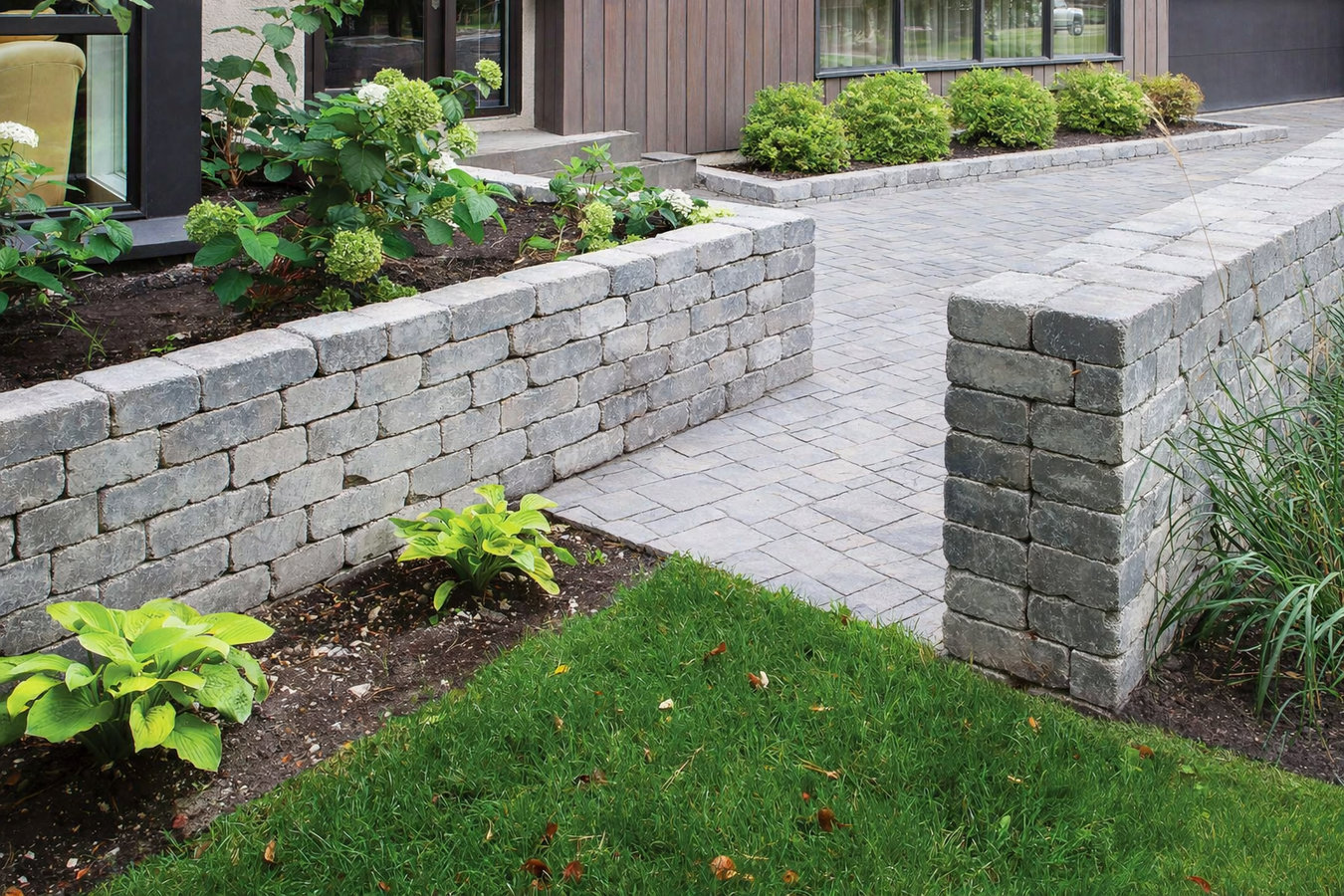
Sloped yards lose ground to every monsoon season. We build concrete retaining walls in Las Cruces that hold your soil in place, handle desert drainage, and turn unusable hillside into flat, functional outdoor space.
Concrete retaining wall construction in Las Cruces starts with a site assessment, continues through footing excavation and drainage installation, and finishes with a poured wall built to hold back soil through monsoon season after monsoon season - most residential jobs take two to five days of active work plus a full cure period before backfilling.
Every retaining wall project in Las Cruces involves two challenges that out-of-town contractors often underestimate: breaking through the caliche layer to set a proper footing, and installing drainage behind the wall that can handle the sudden, intense rainfall of our monsoon season. A wall without those two things handled correctly will look fine the first summer and start to lean or crack after that. If your sloped lot also needs an upgraded outdoor area once the wall is in, our concrete floor installation service is a natural follow-on project to create a level patio or slab on the newly retained ground.
Walls above a set height require a permit from the City of Las Cruces. We handle the application, coordinate the city inspection, and give you a documented, permitted project from start to finish.
If you see bare patches, ruts, or small channels forming on a sloped part of your yard after a monsoon storm, that is active erosion. Each season removes more soil and eventually threatens nearby structures. A retaining wall stops the cycle permanently instead of waiting for the damage to compound.
A fence post that has tilted, a patio edge that has cracked, or soil that seems to be piling up against your driveway are signs a hillside is slowly moving downhill. In Las Cruces neighborhoods near the Organ Mountains foothills, this kind of slow soil movement is more common than most homeowners realize and rarely corrects itself.
Horizontal cracks across a wall face, forward tilt, or visible bowing in the middle all mean the wall is under pressure it can no longer handle. This often happens when drainage behind the wall has failed. A leaning wall is a safety hazard and will cost more to fix the longer it is left alone.
If water consistently collects near your home's foundation after a storm, a poorly graded slope nearby may be directing monsoon runoff toward your house. That pattern causes foundation damage over time. A properly designed retaining wall, combined with grading adjustments, redirects that water away from your home before it becomes a structural problem.
We build poured concrete walls and block retaining wall construction for residential properties across Las Cruces - from low landscape borders that hold a garden bed in place to engineered walls on steep hillside lots that require permit review. Every project starts with a site visit to assess your slope, soil type, and how water moves across your yard before we quote anything.
Drainage is included in every wall we build, not offered as an optional upgrade. That means gravel backfill and a perforated drain pipe behind the wall, placed before backfilling, so monsoon water has somewhere to go rather than pressing against the concrete. For properties that also need structural support below grade, our concrete footings work can be scoped alongside retaining wall construction to create a properly anchored system that handles both lateral soil pressure and vertical load.
Taller walls and anything near a structure will also have a permit discussion upfront. We do not build walls that should require permits without pulling them.
Formed and poured in place - the strongest option for tall walls or walls under heavy soil load on steep Las Cruces lots.
Versatile and well-suited for mid-height garden terracing where flexibility in layout and a finished appearance both matter.
For homeowners whose primary concern is monsoon runoff direction rather than a full retaining structure.
Las Cruces gets over 300 sunny days a year and most of its rain in a compressed two-month window. That combination creates a specific risk for retaining walls: dry soil that has loosened over the summer months gets hit with intense rain in July and August, and water pressure behind an undrainaged wall can build faster than anywhere with a more even rainfall pattern. The Organ Mountains foothills neighborhoods on the east side of the city have some of the steepest natural grades in the area, and homeowners there regularly deal with erosion that levels off flat land only with a proper retaining structure.
Caliche also changes the economics of retaining wall work in Las Cruces compared to other parts of the country. Footing excavation that takes an afternoon in clay or sandy soil can take twice as long here when the crew hits a caliche layer that requires mechanical breaking. We account for that in estimates rather than treating it as a change order, because we have done enough work in this area to know when and where it is likely.
We serve the full area, including homeowners in Anthony, Truth or Consequences, and Chaparral where sloped terrain and drainage challenges are common. Call us and we will come see your yard before quoting anything.
We visit your property to assess the slope, soil, drainage patterns, and any nearby structures before quoting. A phone description is never enough for accurate retaining wall pricing - we need to see the site.
If your wall requires a City of Las Cruces permit, we submit the application after you accept the estimate. Permit approval typically takes a few days to a couple of weeks. We keep you updated so you know when work can begin.
We excavate to the footing depth, breaking through caliche as needed. Forms and steel reinforcement go in, the concrete is poured, and gravel backfill with drainage pipe is installed before any soil goes back against the wall.
Fresh concrete needs at least a week before heavy backfill. Once cured, soil is compacted back in stages. If a permit was pulled, the city inspector signs off before we close out the job and walk through the finished work with you.
We respond to all estimate requests within 1 business day.
We respond within 1 business day. No obligation - just a free on-site assessment and a written price that accounts for your actual site conditions, including caliche and drainage. Someone from our office will call to schedule your site visit.
(575) 222-9104New Mexico requires state licensing for concrete contractors. Our license number is available before you sign anything, and you can verify it directly through the state's online portal. That license means we carry required insurance and are accountable to a regulatory body if anything goes wrong.
We install gravel backfill and drainage pipe behind every retaining wall as a standard part of the build - not an add-on. In Las Cruces, where monsoon storms can deliver an inch of rain in an hour, drainage is the difference between a wall that lasts and one that fails by its second rainy season.
We have worked in Las Cruces long enough to assess your soil before quoting. When caliche is likely, we factor it into the price upfront. You will not receive a mid-project change order because we hit rock during excavation.
For every wall that requires a permit, we handle the City of Las Cruces application and coordinate the inspection visits. A permitted, inspected wall protects your home value and prevents problems at resale. Learn more about Las Cruces permit requirements at the City of Las Cruces Building Safety Division.
Retaining walls protect your property, create usable outdoor space, and prevent the kind of slow erosion that quietly makes Las Cruces hillside lots harder to maintain every year. We build them to survive monsoon season, not just look good when the concrete truck leaves. You can read about retaining wall drainage standards from the Federal Highway Administration, or verify NM contractor licenses through the Construction Industries Division.
Once a retaining wall creates level ground on a sloped lot, a concrete slab turns that reclaimed space into a finished patio or outdoor area.
Learn moreFor retaining walls or structures that need engineered support below grade, proper concrete footings anchor the system against Las Cruces soil movement.
Learn moreMonsoon season does not wait for a convenient time - contact us now for a free on-site assessment and a written estimate with no obligation.