Loading...
Serving Las Cruces, NM and surrounding areas. (575) 222-9104
Serving Las Cruces, NM and surrounding areas. (575) 222-9104
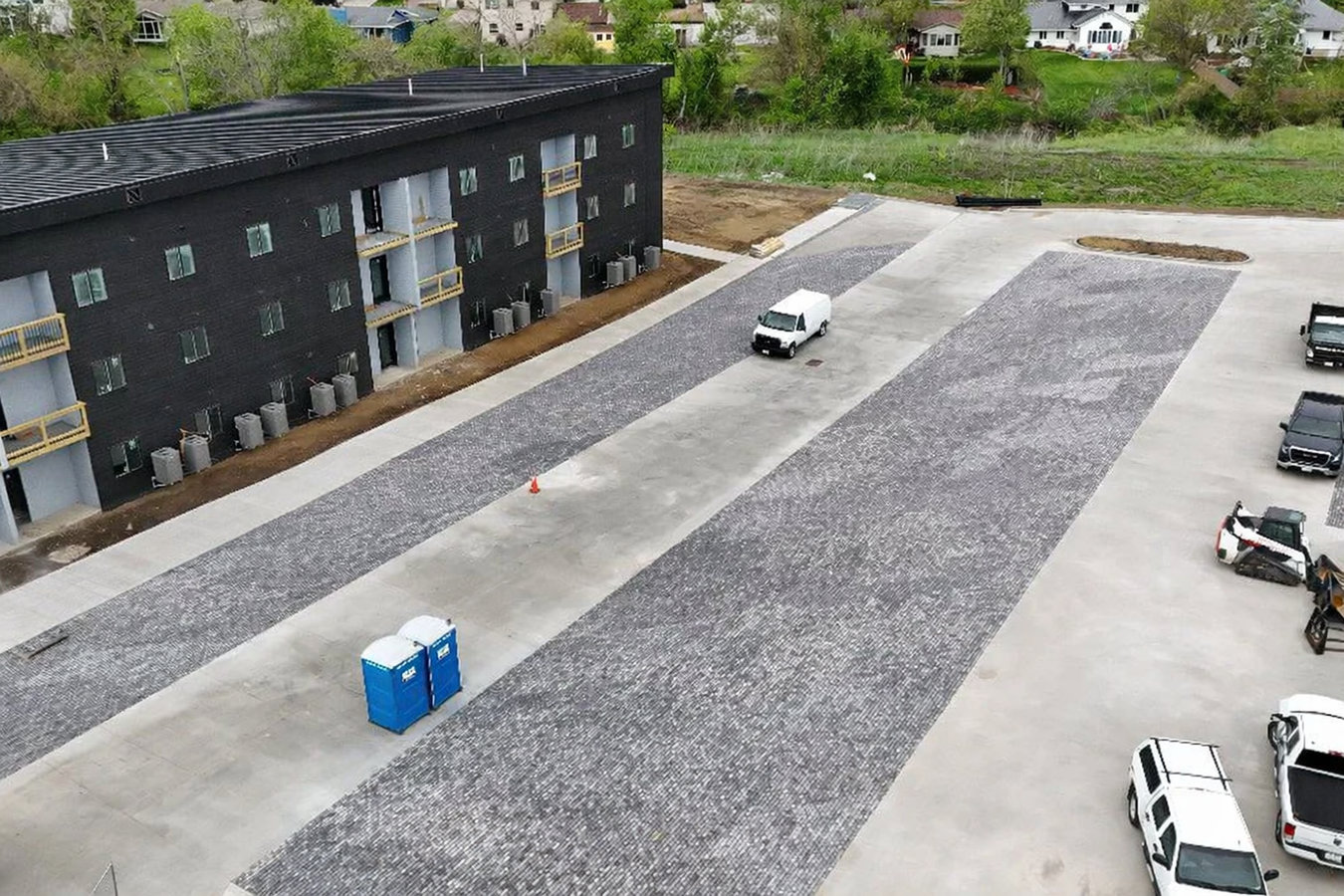
Gravel eroding, dirt blowing everywhere, or water pooling after every storm? We build concrete parking lots in Las Cruces engineered for monsoon drainage, desert soil, and decades of vehicle traffic.
Concrete parking lot building in Las Cruces means grading and compacting the subgrade, setting a crushed aggregate base, pouring a reinforced slab to the correct slope, and cutting control joints so the concrete has a planned place to handle thermal movement. Most residential and small commercial lots are poured in a single day and ready for vehicles within a week.
Most Las Cruces property owners contact us because a dirt or gravel surface has become a maintenance problem: loose material blowing into the house, standing water after monsoon rains, or a surface that has simply worn out. A concrete lot eliminates all three issues in a single project. If the lot connects to your home's existing driveway approach, we can match the paving so the surfaces flow together.
For properties with an existing paved surface that needs a connecting drive, a concrete driveway building project can tie the lot entrance to the street in the same mobilization, saving time and keeping the base work consistent across both surfaces.
If water pools on your parking area after a summer storm, the surface is not draining the way it should. In Las Cruces, where monsoon storms can be intense and fast, poor drainage pushes water toward your building foundation. A properly graded concrete lot moves water away quickly, even during the heaviest July downpours.
Older Las Cruces properties with unpaved parking areas deal with relentless wind that blows loose gravel and desert dust into the home. If you are raking gravel back into place every few weeks or cleaning dust off every surface inside, a concrete lot ends the cycle permanently. No sealing, no spreading, no ongoing material loss.
Cracks wider than a quarter inch, chunks of surface breaking away, or sections that have shifted up or down mean the base underneath has likely failed. Small cracks can sometimes be repaired, but widespread cracking or uneven settling usually points to subgrade movement, making a full replacement the more cost-effective long-term choice.
Stand outside during or right after a rain and watch where the water flows. If it moves toward your home, garage, or any structure rather than away from it, the surface is graded the wrong direction. This is a serious issue in Las Cruces during monsoon season and can lead to foundation damage if left unaddressed over multiple wet seasons.
Our parking lot work covers new construction on unpaved sites, full replacement of failed asphalt or concrete surfaces, and expansion of existing paved areas. Every project starts with a proper base: we grade the subgrade, compact it, and place a crushed aggregate layer before any concrete is poured. That base work is what determines whether your lot stays flat and crack-free for three decades or starts showing problems in five years.
We cut control joints into every lot at the appropriate spacing so thermal expansion from Las Cruces temperature swings has a predictable place to go rather than causing random surface cracks. For properties that also need a main entry approach, we coordinate with our concrete driveway building work so the grades and drainage flow together. If the project involves structural footings for a gate, guard shack, or perimeter wall, we handle the concrete footings in the same mobilization so you are not scheduling two separate crews.
We pull all required permits through the City of Las Cruces Development Services department and handle coordination with city inspectors. The American Concrete Pavement Association publishes the base preparation and joint spacing standards we follow on every commercial and residential lot we build.
Suits property owners replacing a dirt or gravel surface with a permanent concrete lot for the first time.
Suits sites where an existing paved surface has failed, settled, or drains incorrectly and cannot be repaired cost-effectively.
Suits homeowners or businesses adding additional parking capacity to an existing paved area with matching grade and base.
Suits sites where monsoon runoff or poor existing grading has caused repeated flooding or foundation moisture issues.
Las Cruces receives intense monsoon storms from July through September that can drop more than an inch of rain in under an hour. A parking lot that was not graded with these events in mind will flood quickly, and that water does not just inconvenience drivers. It pushes against foundations, saturates the subgrade, and accelerates cracking once the soil dries and shrinks again. The New Mexico Environment Department stormwater program outlines drainage requirements that commercial projects in Las Cruces must meet. We design every lot so it satisfies those requirements and so it actually performs well in practice when a real storm hits.
Parts of the Las Cruces area, including much of the east mesa and older valley neighborhoods, have soils with significant clay content that swell with moisture and shrink as they dry out. That movement is one of the main reasons parking surfaces crack in this market even when they look fine at installation. Before we pour anything, we assess the soil on your specific property and adjust the base depth and preparation accordingly. Homeowners in Las Cruces and nearby communities like Anthony and Sunland Park deal with similar soil conditions, and we apply the same process across all of our service area.
Las Cruces averages more than 300 sunny days a year, and summer temperatures regularly exceed 100 degrees. That heat is a concrete curing challenge, not just a comfort issue. We schedule pours for early morning, use approved curing compounds, and cover fresh surfaces to slow moisture loss during the critical first few days. Skipping these steps in a Las Cruces summer is one of the most common reasons a new lot shows surface crazing within a season of installation.
We visit your property to assess the area, existing surface, soil conditions, and drainage. Most callers hear back within one business day. A phone quote for a parking lot is rarely accurate, so we do not give one until we have seen the site.
We handle the permit application with City of Las Cruces Development Services on your behalf. Permit approval typically takes a few days to two weeks. We schedule your project start date once the permit is in hand.
We remove the existing surface if present, grade the site to the correct drainage slope, and compact a crushed aggregate base. This phase takes one to two days and is the most important work in the entire project. Open trenches and equipment will be on your property during this phase.
The concrete pour typically happens in a single early-morning session. After the crew finishes, cuts control joints, and ropes off the area, you can usually walk on the surface within 48 hours and drive on it within seven days. We walk through the finished lot with you before we leave.
We reply within one business day, visit your site before quoting, and handle the city permit paperwork for you.
(575) 222-9104Our contractor's license through the New Mexico Construction Industries Division is active and publicly verifiable. You can look it up in under two minutes at the NM Regulation and Licensing Department website. That license means we carry the insurance and have met the state's training requirements, which protects you if anything goes wrong on your property.
We schedule all summer pours for the early morning hours and use curing compounds approved for high-UV, high-heat environments. Las Cruces concrete that is allowed to dry too fast in afternoon heat develops surface crazing before it reaches full strength. Our scheduling and curing protocol is the same on every job, not something we improvise when it gets warm.
Every lot we build is graded to a minimum 1.5 percent slope so monsoon runoff moves away from structures. We walk the drainage plan with you during the estimate, not after the pour. Homeowners in the Mesilla Valley and East Mesa have significantly different drainage needs, and we design each project for the specific site conditions we find.
We handle the City of Las Cruces permit application and schedule the city inspection ourselves. You do not have to call the Development Services office or track down an inspector. Permitted work creates a permanent record that the project was done correctly, which matters when you sell the property or make a future insurance claim.
Every parking lot we build in Las Cruces goes through the same process: site assessment, permitted plans, proper base prep, and a documented pour. The combination of local soil knowledge, desert curing protocol, and city permit compliance is what gives our lots a service life measured in decades rather than years.
Underground concrete bases for gates, guard structures, perimeter walls, and any vertical element that needs a permanent footing in Las Cruces soil.
Learn moreResidential driveway construction that ties directly into your parking lot entrance for a consistent grade and base across both surfaces.
Learn moreSummer monsoon season fills our schedule fast. Call or submit a form today and we will visit your site within the week.