Loading...
Serving Las Cruces, NM and surrounding areas. (575) 222-9104
Serving Las Cruces, NM and surrounding areas. (575) 222-9104
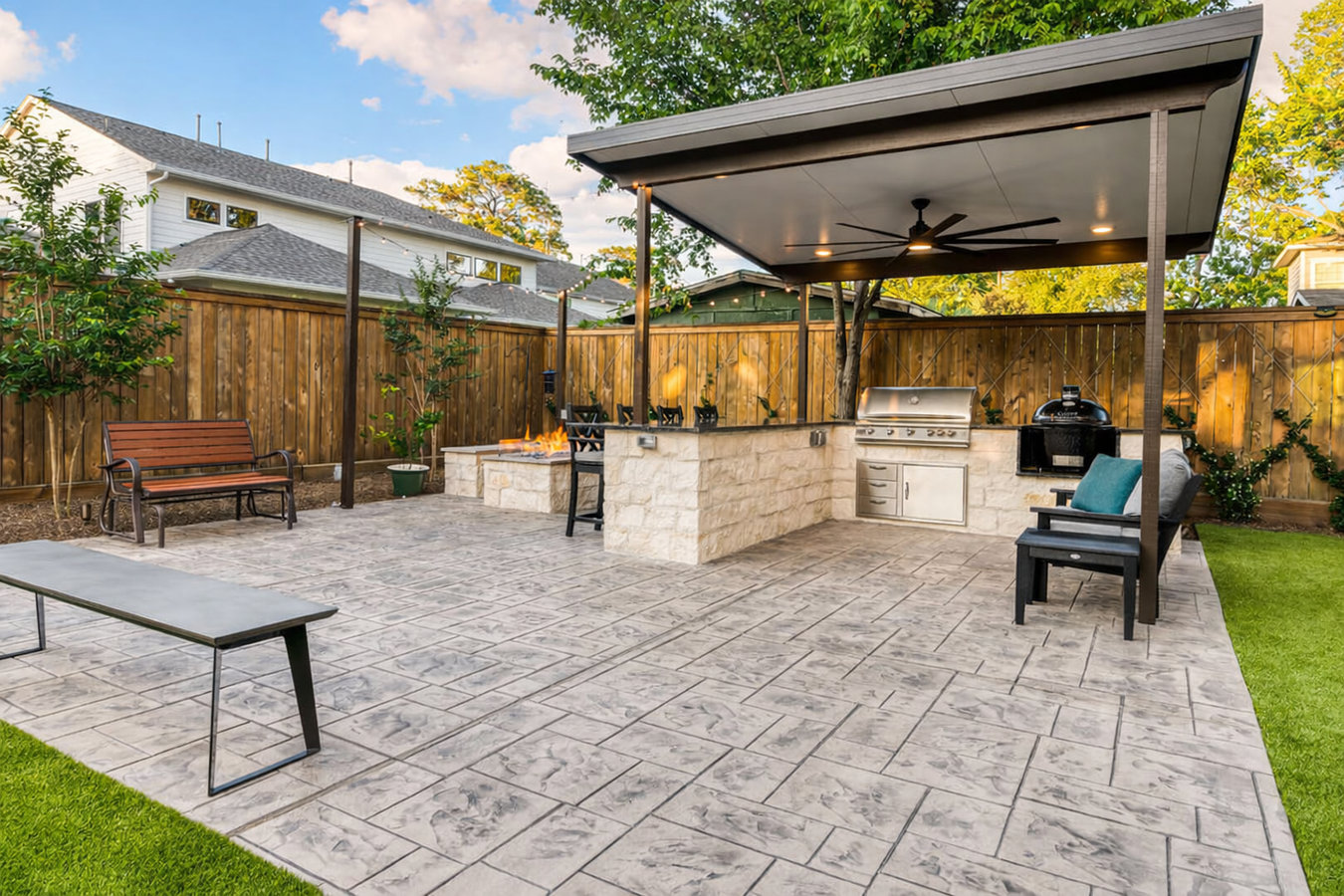
A bare gravel yard or a cracked old slab keeps you inside during the best weather Las Cruces has to offer. We build concrete patios graded for monsoon drainage, finished to stay cooler underfoot, and permitted through the city so you have documentation that protects your home.
Concrete patio construction in Las Cruces starts with excavating your yard, breaking through caliche if it is present, grading for monsoon drainage, then pouring and finishing a slab that handles constant desert sun - most residential patios take one to three days of active work, with a week before light foot traffic.
The foundation work is what separates a patio that lasts from one that heaves and cracks within a few years. Las Cruces sits on caliche soil that requires specific preparation, and every patio needs to slope slightly away from your home so monsoon runoff does not pool against your foundation. If you want decorative patterns pressed into the surface, our stamped concrete services can be combined with patio construction for a unified decorative finish.
The City of Las Cruces requires a building permit for most patio projects. We handle that paperwork before a shovel goes in the ground, coordinate the city inspection, and leave you with a documented, permitted installation.
If your backyard is unpaved and you skip outdoor time because the surface is dusty and unpleasant, a concrete patio solves the problem directly. In Las Cruces, bare desert soil also blows dust through back doors during windy spring months - a paved surface reduces that inside your home.
Cracks wider than a quarter inch, sections that have lifted relative to each other, or crumbling edges are signs your existing slab has been compromised by soil movement. In Las Cruces, caliche and temperature-driven expansion accelerate this damage. A patio in this condition is a trip hazard past the point where patching makes sense.
Standing water collecting close to your foundation after a summer storm means drainage is not working. A properly graded concrete patio directs that water away from your house rather than letting it pool against the slab or wall. This is a specific concern in Las Cruces, where monsoon storms can drop significant rainfall in under an hour.
Any outdoor structure with real weight needs a solid, level concrete base to sit on safely. If you are planning a built-in grill, a covered pergola, or a hot tub and your yard is currently unpaved or on an old cracked slab, the concrete foundation is the right first step.
We build new concrete patios on bare ground, replace existing slabs that have deteriorated beyond repair, and extend current patios where additional outdoor space is needed. Every project starts with a site visit to measure, assess drainage, and check for caliche before we quote anything.
Finish options range from a standard broom texture, which is the most practical for Las Cruces because it grips on dusty surfaces and stays cooler underfoot than a polished finish, to stamped concrete patio patterns that mimic stone, brick, or tile. For homeowners planning an outdoor living area that includes a pool or water feature, our concrete pool decks service covers the specialized requirements of those areas alongside the main patio slab.
All work includes permit handling, base preparation built for local soil conditions, hot-weather curing protocol, and a final walkthrough before we leave the site.
For bare or gravel yards - excavated, graded, and poured on a compacted base with your choice of finish.
Full removal of an old deteriorated slab and a fresh pour - the right choice when patching has run its course.
For homeowners who want a patio that looks like stone or brick - textured mats pressed into fresh concrete before it sets.
Las Cruces gets over 300 sunny days a year and the UV exposure is intense year-round at this elevation. A patio finished without a UV-resistant sealer will fade and break down faster than it should. Beyond surface protection, drainage planning is the most consequential decision made during a patio project here: the city receives most of its roughly 9 to 10 inches of annual rainfall in sudden monsoon bursts, and a patio graded even slightly toward the house will direct that water straight to your foundation.
Caliche, the hard calcium-rich layer common just below the surface in the Mesilla Valley, requires specific equipment to break through during excavation. Contractors who do not check for it before quoting sometimes return mid-project requesting more money. We assess for it during every site visit and include it in the written estimate. Homes near Old Mesilla and properties on the valley floor typically have different soil profiles from those on the east or west mesa - we check what is actually under your yard.
We serve homeowners across the full Las Cruces area, including Anthony, Sunland Park, and El Paso. Call us and we will come see your yard before we give you any number.
We schedule a visit to see your yard in person - measure the area, check the slope, look at the soil, and discuss finish preferences. No contractor should quote a patio over the phone without seeing the site first.
After you accept the written estimate, we pull the required building permit from the City of Las Cruces. We schedule around peak heat and monsoon season to give your pour the best conditions. We respond to all requests within 1 business day.
The crew removes the existing surface or vegetation, breaks through any caliche, compacts the base, and pours the concrete in one continuous operation. Hot-weather pours start early morning to avoid peak afternoon heat.
We apply a curing compound to protect the surface in the desert heat. The city inspector signs off on the work, which we coordinate. We do a final walkthrough with you before leaving - including guidance on when to seal the surface.
We respond to all estimate requests within 1 business day.
We respond within 1 business day. There is no obligation - just a free on-site estimate and a written price. After you submit, someone from our office will call to schedule a time to come see your yard.
(575) 222-9104Every patio we build is graded away from your foundation before pouring begins. In Las Cruces, where monsoon storms can drop an inch of rain in under an hour, slope planning is not optional - it is the difference between a patio that drains cleanly and one that sends water toward your house.
We check for caliche during every site visit and include removal in the written estimate rather than billing it as a surprise mid-project charge. We have worked on valley floor properties near Old Mesilla and mesa homes in Sonoma Ranch - the soil profile is different in each, and we account for that before quoting.
We are licensed through the New Mexico Construction Industries Division. Every project requiring a permit has one pulled before work begins. You receive documentation of a city-inspected installation - which matters when you refinance, sell, or make an insurance claim.
Our estimates are written, itemized, and reviewed with you before any work starts. We do not send a crew and then ask for more money when they hit a hard layer. The number you agree to is the number you pay, absent any changes you request.
A properly built concrete patio adds usable square footage to your home and can improve drainage around your foundation at the same time. For guidance on caliche soil conditions specific to the Las Cruces area, the New Mexico State University Cooperative Extension publishes research on caliche in New Mexico soils. For drainage requirements and permit information, the City of Las Cruces Development Services is the official source.
If a plain gray slab is not what you have in mind, stamped concrete can give your patio the look of stone, brick, or tile - pressed into the surface before it sets.
Learn morePool surrounds need slip-resistant surfaces and drainage graded away from the water - a specialized extension of the same concrete work that goes into a standard patio.
Learn morePatio season in Las Cruces starts early - contact us now for a free on-site estimate and a written price before the schedule fills up.