Loading...
Serving Las Cruces, NM and surrounding areas. (575) 222-9104
Serving Las Cruces, NM and surrounding areas. (575) 222-9104
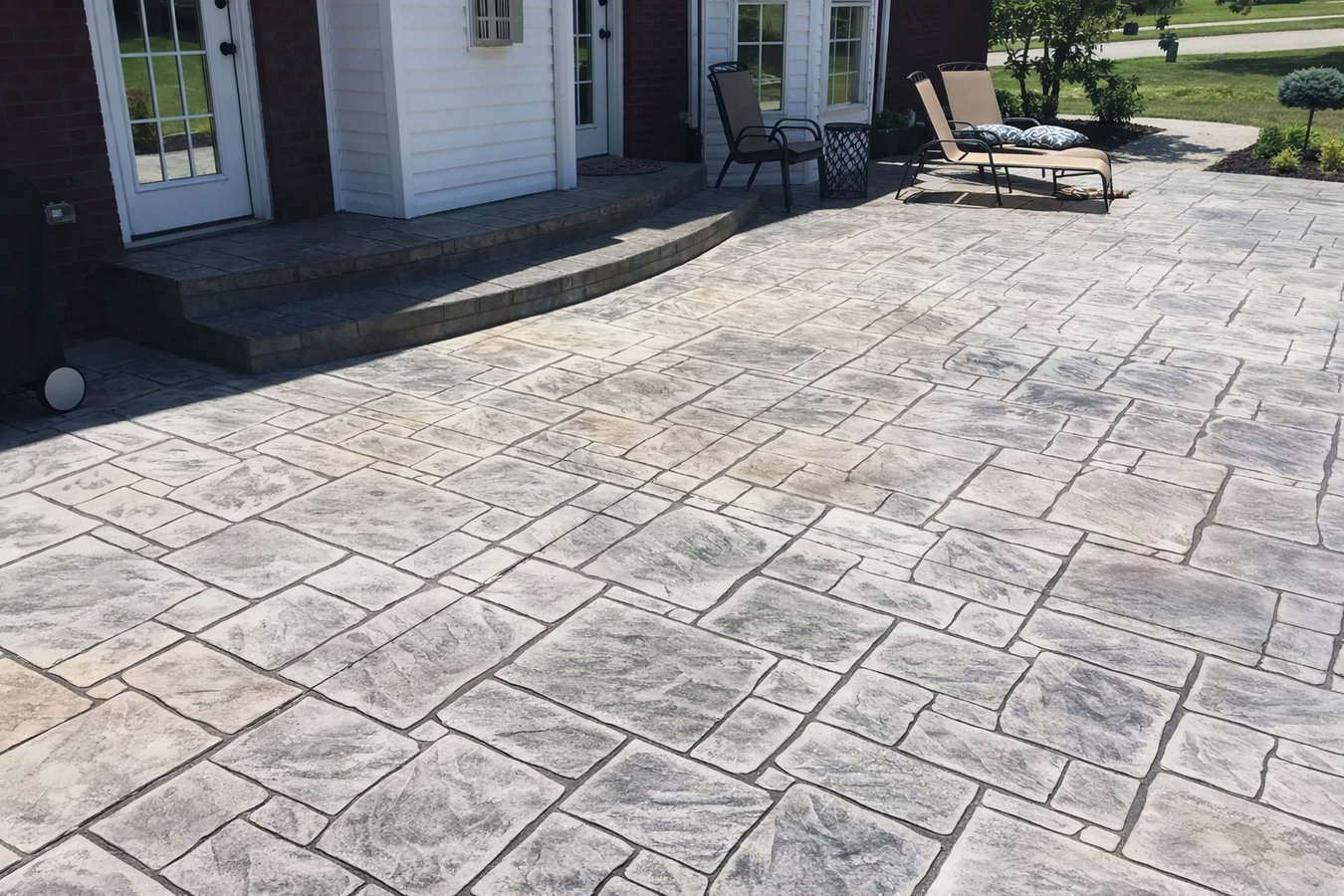
Plain gray concrete fades fast under the desert sun. Stamped, stained, or polished concrete gives you a surface that holds its color and holds up through summer heat and monsoon rains.
Decorative concrete in Las Cruces uses stamping, staining, or polishing to give concrete the appearance of stone, slate, tile, or brick while keeping the durability and cost advantage of a solid slab, most projects take one to three days of installation plus a 24-to-72-hour wait before normal use.
Many Las Cruces homeowners turn to decorative concrete because they want a finished outdoor space that can handle 300-plus days of intense sun, monsoon rain, and the dust that comes with desert living, without paying the cost of natural stone or dealing with weed growth between individual pavers. Whether you are updating a front driveway, adding a back patio, or resurfacing a pool deck, decorative concrete offers finish options that hold up in this climate when they are installed and sealed correctly.
Decorative concrete pairs naturally with stamped concrete services for patterned outdoor surfaces. If you are working on an outdoor living area, our concrete retaining walls team can handle grading and border work in the same project mobilization.
If your patio or driveway has lost its color or looks dull and gray after years of Las Cruces sun, the surface is unprotected and aging. Decorative concrete, whether a fresh stain, a new overlay, or a full replacement, can restore the look without necessarily tearing everything out. A contractor can assess whether the existing slab is solid enough to work with.
Cracks that are widening, have edges at different heights, or appear in a pattern across the slab may signal a problem with the base. In Las Cruces, caliche soil and the expansion and contraction caused by extreme temperature swings both contribute to this kind of movement. If you are noticing more cracks each year, have a contractor look at it before the damage gets worse.
Standing water on a concrete surface can work its way into small cracks, weaken the slab over time, and make the surface slippery. If water sits in the same spots after every storm, the surface may not be sloped correctly. A decorative overlay or replacement can be installed with better drainage built in from the start.
Many Las Cruces homeowners have patios they rarely use in summer because the dark concrete surface radiates heat and feels uninviting. Lighter-colored decorative finishes reflect more heat than dark plain concrete, and a well-designed stamped or stained surface can make the space usable again, even in the desert heat.
We install stamped concrete patterns that mimic flagstone, slate, cobblestone, and wood plank on patios, driveways, walkways, and pool decks. Color is either mixed into the concrete before the pour or applied to the surface before stamping, and every finished surface is sealed with a UV-resistant product suited to the Las Cruces climate. For homeowners working with an existing slab that is structurally sound, we also apply stains and overlays that transform the appearance without a full tear-out.
Our decorative work extends to full stamped concrete services for large patterned outdoor areas. When projects involve grade changes or retaining areas, we coordinate with our concrete retaining walls crew to handle the full scope under one contract. We also work with HOA communities in Sonoma Ranch, Picacho Hills, and similar Las Cruces subdivisions where finish and color guidelines need to be confirmed before work begins.
Suits homeowners who want the look of stone or pavers on a patio, driveway, or pool surround without the cost of individual units.
Suits homeowners with an existing sound slab who want rich, permanent color without a full replacement.
Suits homeowners who want a low-maintenance, clean-looking interior floor or garage slab that resists staining and dust.
Suits homeowners whose existing concrete is cosmetically worn but structurally sound, refreshing the surface without demolition.
Las Cruces averages more than 300 sunny days a year, and that level of UV exposure breaks down sealer faster than in most parts of the country. An unsealed or poorly sealed decorative surface can fade noticeably within a single summer. A contractor who knows this market will specify UV-resistant sealers and schedule pours for early morning so the concrete does not set too fast in the midday heat. Low humidity in the Chihuahuan Desert, often below 20 percent in summer, compounds the drying risk further. These are not generic concerns; they are the specific reasons decorative concrete jobs in Las Cruces fail when a contractor brings a standard approach to a non-standard climate.
The Mesilla Valley's caliche soil layer and the monsoon season from July through September also shape how we approach every project. Drainage must be built into the slab grade from the start, because fast-moving monsoon runoff pooling against a poorly sloped patio or driveway works into small cracks and accelerates damage. Homes in newer east-side and north Las Cruces subdivisions like Sonoma Ranch and Picacho Hills often have HOA guidelines governing visible concrete finishes; we help homeowners confirm compliance before any work begins.
We serve the full Las Cruces area, including Sunland Park, Anthony, and El Paso, TX. Call us to confirm your address is in our service range and to get a no-pressure on-site estimate.
We respond within one business day, ask about the space and what you have in mind, and schedule a free on-site visit. No number is given over the phone before we see the area in person.
At the on-site visit you choose the finish, pattern, and color. We show you samples and, if possible, point you to a completed local project so you can see how the finish holds up in actual Las Cruces conditions. You receive a written, itemized quote before any deposit is paid.
The crew arrives early to beat the midday heat, prepares the base, pours and finishes the concrete, applies the initial color treatment or stamping, and begins curing. HOA paperwork and permits are handled before this day.
After the concrete has cured enough, typically within 24 to 48 hours, we apply the UV-resistant sealer. We then walk through the finished project with you and leave you with written care instructions, including when to reseal and what products are safe to use.
Free on-site estimate, written quote, no obligation. HOA guidelines confirmed before work begins.
(575) 222-9104We specify sealers rated for high-UV environments on every decorative concrete job in Las Cruces. That is not a premium add-on here; it is the baseline, because the standard products sold in most parts of the country are not built for more than 300 sunny days a year.
Every decorative concrete surface we install is graded to move water away from your home and prevent pooling. That is especially important in Las Cruces, where monsoon storms can deliver a large amount of rain in a short time and expose every drainage flaw in a surface.
We serve neighborhoods across Las Cruces where HOA design guidelines govern visible exterior finishes. We confirm compliance with color, pattern, and material rules before the pour day so you are not dealing with a letter from the association after the work is done.
Our license is current with the New Mexico Construction Industries Division. You can verify it online before you sign anything. That licensing requires proof of insurance, which protects you if anything goes wrong on your property.
The American Society of Concrete Contractors outlines professional standards for decorative work that go beyond what licensing alone covers. We hold our projects to those standards because a decorative concrete surface is only worth the investment if it still looks right three or four summers from now, not just on installation day.
Specialized large-area stamping work for driveways, patios, and pool surrounds where pattern consistency and color matching require a dedicated installation process.
Learn moreGrade changes and border structures that complement a decorative concrete patio or driveway project and handle Las Cruces soil movement over time.
Learn moreSummer project slots fill early, and spring is the best window to pour before the heat arrives.